China Tightens Its Grip on Critical Minerals — and the World Scrambles to Respond
From rare earths to strategic gases such as helium, Beijing is demonstrating how control of a few obscure materials can translate into leverage over the world's most advanced industries.
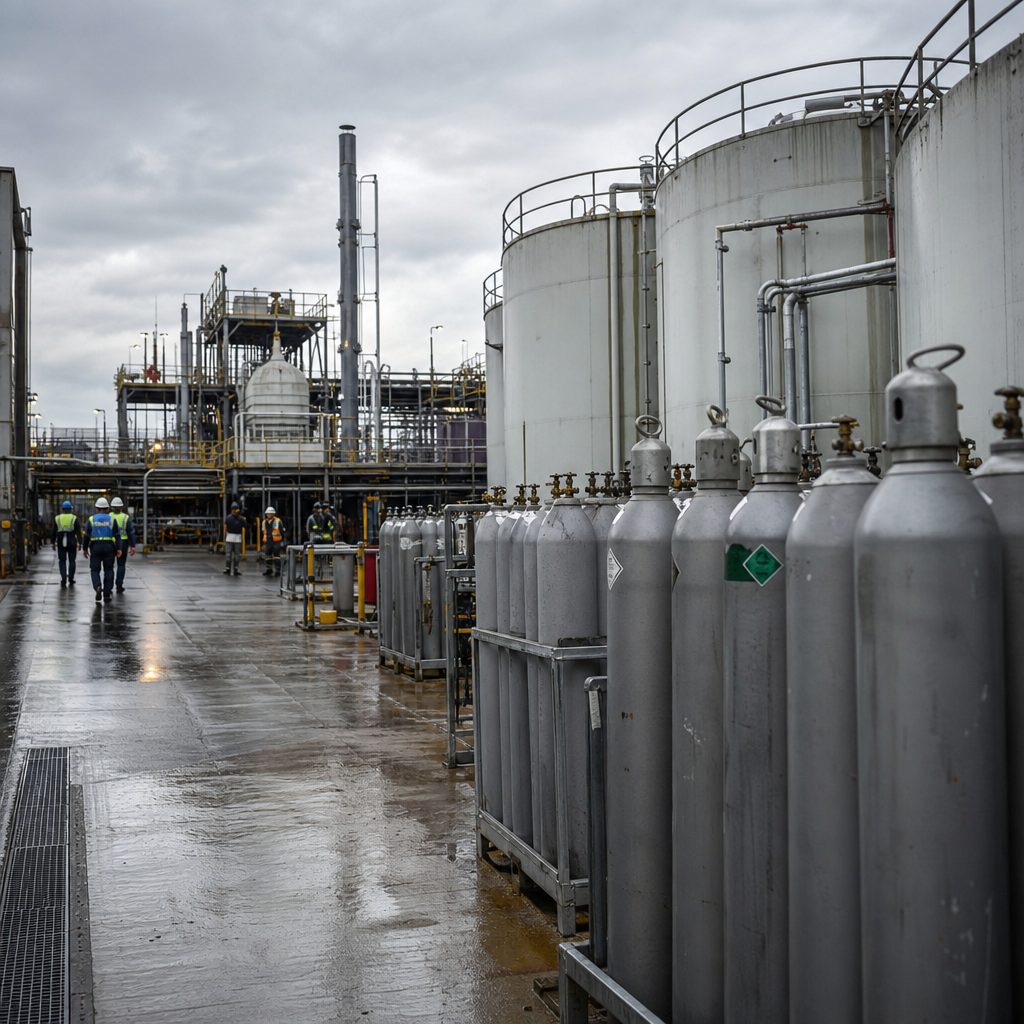
Processing, not mining, is where the real leverage lies. Whoever refines the materials controls the supply.
Most people will never knowingly handle a rare-earth element or a cylinder of high-purity helium, yet both sit at the foundation of the modern economy. Rare earths are essential to the magnets in electric motors, wind turbines, smartphones and precision-guided weapons. Helium, far from being a party-balloon curiosity, is indispensable to semiconductor manufacturing, medical scanners and aerospace. These are not commodities most consumers think about — until they become unavailable. And increasingly, their availability is being used as an instrument of state power.
The latest illustration came with reports that China has moved to restrict exports of strategic materials, including helium, amid the broader turbulence in global affairs. It is the newest entry in a pattern that has been building for years: Beijing's growing willingness to convert its dominance of critical-mineral supply chains into diplomatic and economic leverage. For the industries that depend on these materials, and for the governments that oversee them, it is a wake-up call whose implications are only beginning to be understood.
The chokepoint that most people never see
The vulnerability at the heart of the story is not primarily about where these materials are dug out of the ground. Rare earths, despite their name, are not especially rare in geological terms; deposits exist on several continents. The true chokepoint is processing. Turning raw ore into the refined, high-purity materials that industry actually needs is a complex, capital-intensive and environmentally demanding business — and it is one in which China has built a commanding, in some cases near-monopolistic, position over decades of deliberate investment.
That processing dominance is what gives export controls their bite. A country can hold ample reserves of a mineral in the ground and still be dependent on a single foreign supplier for the refined product, because building the refining and separation capacity to replace it takes years and enormous sums of money. Control of processing, not deposits, is the real source of leverage — and it is a lesson the rest of the world is now learning the hard way.
The power does not lie in owning the mine. It lies in owning the plant that turns ore into something an industry can actually use.
From commerce to statecraft
For most of the era of globalisation, the flow of industrial inputs was treated as apolitical plumbing — a matter for markets, not ministries. That assumption is dissolving. Increasingly, states view their control over critical materials the way they once viewed control over oil: as a strategic asset to be deployed in pursuit of national objectives. Export licences, quotas and outright bans have become tools of pressure, wielded to signal displeasure, extract concessions or retaliate in disputes that may have nothing to do with the materials themselves.
China is not alone in this; the weaponisation of economic interdependence has become a general feature of great-power rivalry. But Beijing's position in critical minerals gives it unusually potent options. When it tightens the supply of a material for which there is no ready substitute and no alternative supplier at scale, the effect is felt almost immediately in factories thousands of kilometres away. The reported helium curbs are a case in point: a single decision in one capital can ripple through the semiconductor and medical-equipment industries of many others.
Why the timing matters
The tightening of critical-mineral exports is not happening in a vacuum. It coincides with heightened tension across the international system — renewed conflict in the Gulf, an oil-price shock, and a broader unravelling of the assumptions that underpinned decades of open trade. In that context, control of critical materials becomes one more front in a wider contest over who sets the terms of the global economy. Each individual restriction may be modest; taken together, they describe a world in which the arteries of trade are increasingly treated as pressure points to be squeezed.
For the industries most exposed — advanced electronics, clean energy, aerospace, defence — the message is stark. The just-in-time, lowest-cost supply chains built during the age of globalisation optimised ruthlessly for efficiency, often by concentrating production and processing in a single dominant location. That concentration, so profitable in stable times, has become a strategic liability. Resilience and efficiency, it turns out, can be in direct tension, and the balance is now shifting toward resilience.
The scramble to respond
Governments and companies are responding, though the process is slow and expensive. Efforts are under way across several regions to build alternative processing capacity, to develop new mines outside the dominant supplier's control, to stockpile critical materials as strategic reserves, and to invest in recycling and substitution that could reduce dependence over time. Trade partnerships aimed at pooling resources and diversifying supply have multiplied. The direction of travel is clear: the world is trying, belatedly, to reduce the leverage that a single supplier can exert.
The supply chains built for efficiency are being rebuilt for resilience — and resilience does not come cheap.
But the obstacles are formidable. Building refining capacity is not merely a matter of money; it requires technical expertise, environmental permitting and years of construction, all while the incumbent supplier can undercut prices to make new entrants unprofitable. Recycling and substitution help at the margins but cannot yet replace primary supply at scale. And the sheer breadth of materials involved — dozens of elements and gases, each with its own supply chain — makes comprehensive self-sufficiency a distant goal. For the foreseeable future, a degree of dependence is simply a fact of industrial life.
The lesson beneath the headlines
The story of critical minerals is, in the end, a story about the hidden architecture of the modern economy — the obscure inputs and specialised processes on which the visible world of gadgets, vehicles and machines silently rests. For decades that architecture was invisible precisely because it worked so smoothly. It is becoming visible now because it is being used as a weapon, and because its vulnerabilities have been exposed by a more contested and fragmented international order.
The reported helium restrictions will likely be managed, as previous episodes have been, through some combination of stockpiles, workarounds and quiet negotiation. But the underlying lesson will outlast this particular flashpoint. In a world where economic interdependence has become a domain of competition rather than a guarantee of peace, control over the materials that build the future is power — and the states that hold it have every incentive to use it. Understanding that shift is essential to understanding the geopolitics of the years ahead.