Why 'Frozen' Conflicts Are Flaring Again Across Three Continents
Long-dormant territorial disputes are heating up as external powers test old ceasefire lines. A look at where the risks are rising fastest — and why the old freezes are thawing at once.
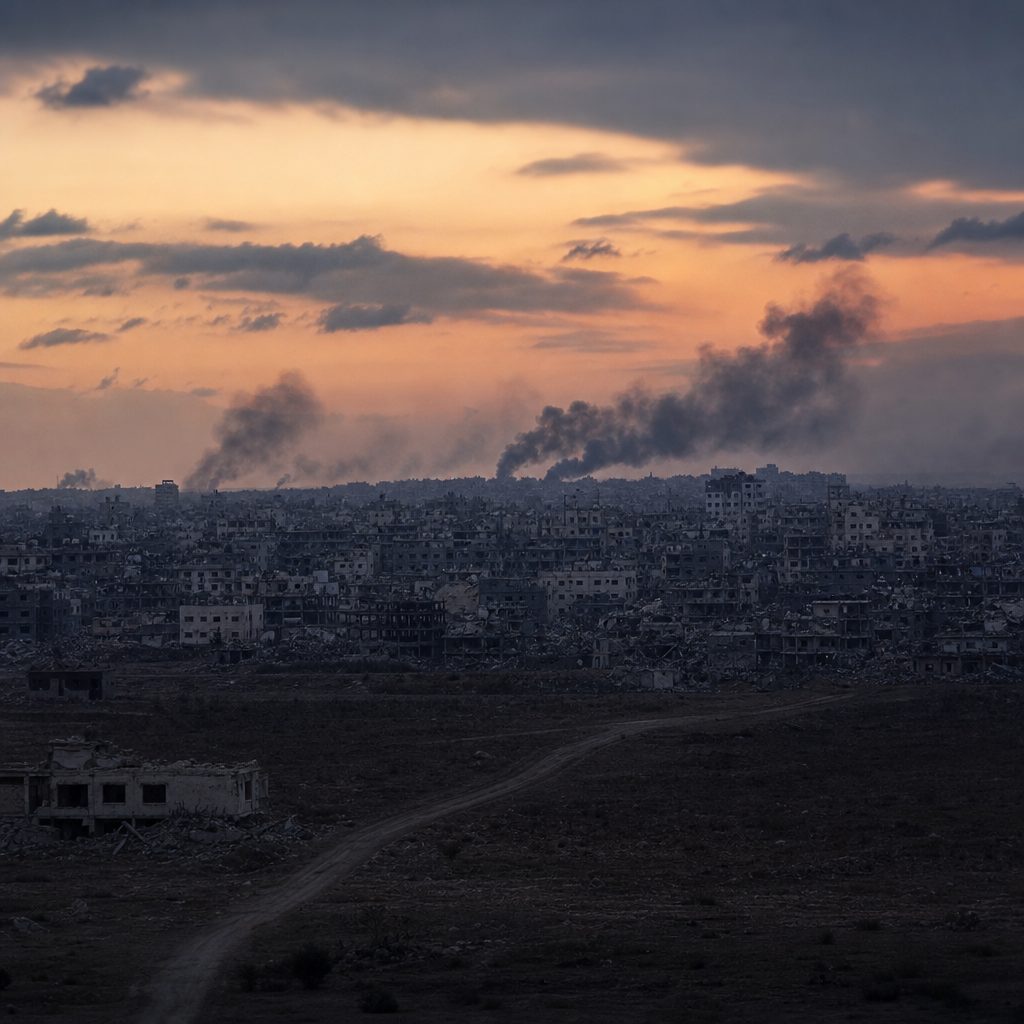
Ceasefire lines that held for years are once again under pressure.
A frozen conflict is a strange thing. The shooting stops, but the war never formally ends. Borders are drawn on maps in dotted lines. Soldiers face each other across trenches or buffer zones for years, sometimes decades, in a state that is neither peace nor open war. For a long time, these standoffs were treated as background noise — regrettable, unresolved, but stable. That assumption is now breaking down. Across three continents, conflicts that had settled into an uneasy stillness are stirring back to life at the same time, and the pattern is too consistent to be coincidence.
The danger of frozen conflicts is precisely that their stability is an illusion. Nothing has been resolved; the underlying grievances, claims and fears remain intact, merely suspended. When the external conditions that enforced the freeze change — when a patron loses interest, a rival senses weakness, or a new weapon shifts the local balance — the ice can crack quickly. What follows is often more violent than the original standoff, because a generation of accumulated resentment is released at once.
What kept them frozen
To understand why these conflicts are thawing, it helps to understand what froze them in the first place. In most cases, three factors combined. First, a rough local balance of power made a decisive victory by either side too costly to attempt. Second, one or more outside powers had an interest in preventing escalation and leaned on their clients to hold the line. Third, a set of monitoring arrangements — peacekeepers, observers, hotlines — reduced the risk that a small incident would spiral into a large one.
Every one of those stabilising factors is now weaker than it was a decade ago. Local balances have shifted as new weapons, particularly cheap drones and precision munitions, have made offensives look more feasible. Outside powers, distracted by rivalries elsewhere and less willing to spend political capital restraining allies, have loosened their grip. And the monitoring arrangements have frayed as the multilateral bodies that ran them have grown gridlocked and underfunded.
A frozen conflict does not resolve tension — it stores it. When the freeze fails, everything that was suspended is released at once.
The drone changes the math
If there is a single technological factor behind the thaw, it is the transformation of the battlefield by inexpensive uncrewed systems. For decades, the cost of mounting an offensive across a fortified line was prohibitive; dug-in defenders held a decisive advantage. Cheap, precise aerial systems have narrowed that advantage dramatically. Positions that were once secure are now vulnerable to attack from operators who never cross the line themselves.
This matters psychologically as much as militarily. A local commander who believes an offensive is finally winnable is far more likely to probe, to escalate, to test what the other side will tolerate. Each probe that goes unanswered invites a bigger one. The careful equilibrium that kept a conflict frozen depends on both sides believing that attacking is futile. Once that belief cracks, the whole structure becomes unstable.
Absent referees
Frozen conflicts were never truly self-stabilising. They were held in place by referees — great powers and international bodies willing to blow the whistle when either side pushed too far. Today those referees are distracted, divided or simply absent. When the major powers are locked in their own rivalries, they have less bandwidth to manage the smaller disputes on the periphery, and less willingness to restrain clients whose aggression might serve a broader strategic purpose.
Worse, some outside powers now see value in a controlled thaw. A patron that wants to tie down a rival, extract concessions or demonstrate resolve may quietly encourage a client to test a ceasefire line, calculating that a limited flare-up can be turned off before it spreads. This is a dangerous game. Conflicts rarely respect the neat limits their sponsors imagine. The history of frozen conflicts is littered with escalations that began as calculated pressure and ended as full-scale war.
Three regions, one pattern
Although the specific disputes differ enormously in their history and geography, the mechanics of the current thaw are strikingly similar across regions. In each case, a long-standing standoff is being reactivated by a combination of new military capability on the ground, reduced restraint from outside patrons, and the erosion of the monitoring that once caught incidents early.
The role of domestic politics
There is also a domestic dimension. Leaders under pressure at home have long found that a manageable confrontation abroad can rally support and distract from difficulties. A frozen conflict offers a ready-made target: a righteous cause, a familiar enemy and the promise of a quick demonstration of strength. The temptation to reheat an old dispute for domestic advantage grows precisely when governments feel most insecure — and insecurity is widespread.
Why simultaneous matters
Individually, any one of these flare-ups might be contained. The concern is their simultaneity. When several frozen conflicts reactivate at once, they compete for the same limited pool of international attention and diplomatic capacity. Mediators who might have focused their energy on one crisis are stretched across several. Peacekeeping resources are spread thin. And each flare-up makes the others more likely to escalate, because it signals that the old restraints are weakening everywhere.
Can they be refrozen?
Refreezing a conflict is harder than freezing it the first time, because trust, once broken by renewed fighting, is slow to rebuild. But it is not impossible, and the tools are known. They include rapid, credible mediation before positions harden; the restoration of monitoring so that incidents are documented and contained; and clear signals from outside powers that further escalation carries costs they are unwilling to bear.
The hardest part is political will. Refreezing requires the major powers to spend attention and capital on disputes that do not directly threaten them, at a moment when they are preoccupied with rivalries that do. That is precisely the calculation that allowed these conflicts to thaw. Breaking the cycle means recognising that a periphery in flames rarely stays on the periphery for long.
The lesson of the last century is simple: small wars ignored on the edges of the map have a habit of arriving at the centre.
The reactivation of frozen conflicts is a warning about the wider state of the international system. These disputes are the pressure gauges of world order — the places where the balance of power, the reliability of alliances and the strength of international institutions are all tested at once. That so many gauges are climbing into the red at the same time is a sign not of unrelated local troubles, but of a global order under strain. Whether the freezes can be restored will say a great deal about whether that order can still be repaired.