The Global Economy in 2026: Fragile Growth, Sticky Inflation and a World of Shocks
An oil-price spike, higher-for-longer interest rates and a fragmenting trade system are testing an economy that never fully regained its footing. Where the world stands, and what to watch.
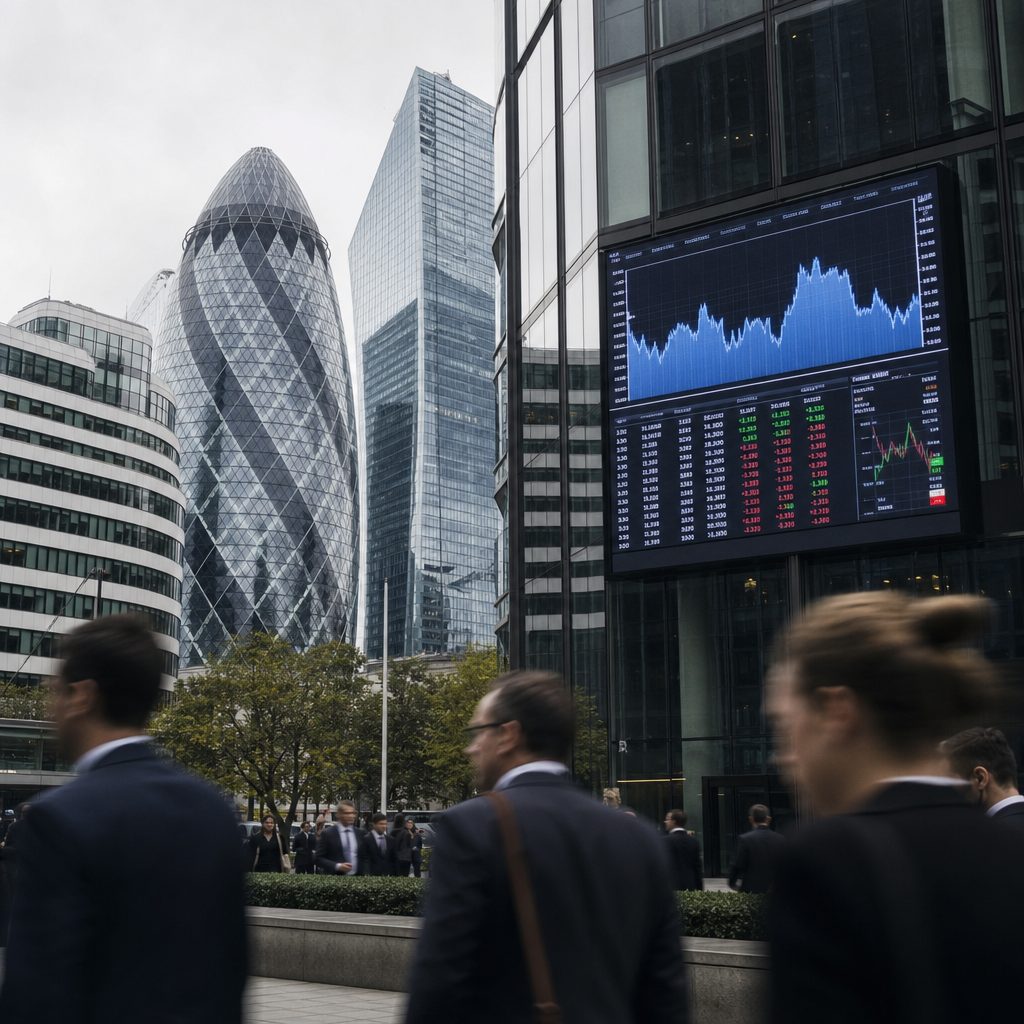
The numbers on the board move fast; the forces behind them move slowly. Understanding both is the key to reading the economy.
The global economy enters the second half of 2026 in an uncomfortable position: not in crisis, but not at ease either. Growth is positive but fragile, unevenly distributed and vulnerable to shocks. Inflation has come down from its peaks but has proved stickier than hoped. Interest rates remain elevated, squeezing borrowers even as they reassure savers. And the whole system is being buffeted by forces that have little to do with the ordinary business cycle: renewed conflict in the Gulf, a jump in oil prices, and a steady fragmentation of the trade relationships that underpinned decades of prosperity. This is an economy learning to live with permanent uncertainty.
To make sense of it, it helps to separate the immediate shocks from the deeper structural shifts. The immediate shocks are the ones dominating the headlines — the oil-price surge, the market swings, the geopolitical alarms. The structural shifts are quieter but more consequential: the reordering of supply chains, the return of industrial policy, the weaponisation of economic interdependence. The first set determines the mood of any given month. The second will determine the shape of the decade.
The inflation that would not fully leave
The defining economic story of recent years has been inflation — its surge, and the painful campaign to bring it back down. That campaign has largely worked, but not cleanly. Headline inflation has eased substantially from its highs, yet underlying price pressures have proved more persistent than many forecasters expected. Services costs, wages and housing have all been slow to cool, keeping inflation above the targets that central banks are mandated to hit.
This is why the hoped-for pivot to sharply lower interest rates has been so cautious and halting. Central bankers, scarred by the experience of underestimating inflation once, are wary of declaring victory prematurely. The result is a "higher-for-longer" environment in which borrowing costs remain elevated well after the initial emergency has passed. For households with mortgages, businesses seeking to invest, and governments servicing large debts, that elevated cost of money is a persistent drag — one of the defining features of the current moment.
The last stretch of the fight against inflation has proved the hardest — and it is being won, if at all, slowly and at the price of higher rates for longer.
The oil shock lands at the worst time
Into this delicate situation has come a fresh disturbance: the spike in oil prices triggered by the renewed crisis in the Strait of Hormuz, which pushed crude from around $70 to more than $100 a barrel in a matter of days. An oil shock is precisely the kind of supply-side pressure that makes the inflation problem worse, pushing up costs across the economy even where demand is soft. It sharpens the central bankers' dilemma: tighten further to contain the inflationary impulse and risk choking growth, or hold steady and risk letting inflation expectations drift.
The timing could hardly be less welcome. Just as the world had begun to hope that price pressures were fading and rate cuts were coming, a geopolitical event thousands of kilometres away has reintroduced exactly the sort of cost pressure that complicates the picture. It is a vivid reminder that in an interconnected world, the domestic economy is never fully insulated from events abroad — and that the line between geopolitics and the cost of living has all but disappeared.
The slow fragmentation of trade
Beneath the cyclical drama, a deeper transformation is under way. The trading system that defined the era of globalisation — built on efficiency, open markets and the assumption that commerce and politics could be kept apart — is fragmenting. Tariffs, export controls, investment screening and sanctions have become routine instruments of statecraft. Supply chains once optimised ruthlessly for cost are being reorganised around considerations of security and resilience. The reported restrictions on critical materials, and the reimposition of oil sanctions amid the Gulf crisis, are recent examples of a much broader pattern.
This reordering carries a price. Redundancy and resilience are more expensive than lean efficiency; reshoring and "friend-shoring" production raise costs; and a world of blocs and barriers is less productive than one of open exchange. The likely consequence is a structurally higher baseline of costs and a somewhat lower ceiling on growth — a quieter, less visible tax paid across the entire global economy in exchange for greater security. Whether that trade-off is worth it is one of the central economic debates of the age.
An uneven world
One of the most important features of the current moment is how unevenly it is being experienced. Energy-importing economies feel the oil shock acutely, while producers benefit. Countries with large debts feel the burden of high rates far more than those without. Economies positioned as trusted suppliers in the new, security-conscious trade order stand to gain; those on the wrong side of it lose. The global economy is not a single story but many, and the divergence between winners and losers is widening.
Resilience is the new watchword — and resilience is simply another way of saying a cost the world has decided is worth paying.
What to watch in the months ahead
For all the uncertainty, a few indicators will do much to determine the trajectory. The first is the path of oil prices: whether the Gulf crisis de-escalates and crude retreats, or whether it entrenches and the shock becomes lasting. The second is the response of central banks: how they balance the renewed inflation risk against the desire to support growth, and whether the long-awaited rate cuts arrive or recede further into the future. The third is the health of trade: whether the fragmentation accelerates or stabilises.
The underlying message, though, is one of adaptation rather than alarm. The global economy is not heading for imminent collapse; it is learning, slowly and expensively, to function in a more fractured and shock-prone world. Growth will likely continue, but it will be more fragile and more unequal than in the calmer decades that preceded it. For households, businesses and governments alike, the era of taking stability for granted is over. Understanding the forces at work — the immediate shocks and the deeper shifts alike — is the first step toward navigating what comes next.