Ceasefire Collapses: US Strikes Iran After Attacks on Shipping in the Strait of Hormuz
A truce that took months to negotiate unravelled in a matter of days. After attacks on vessels in the world's most important oil chokepoint, Washington declared the ceasefire "over" and launched a fresh wave of strikes.
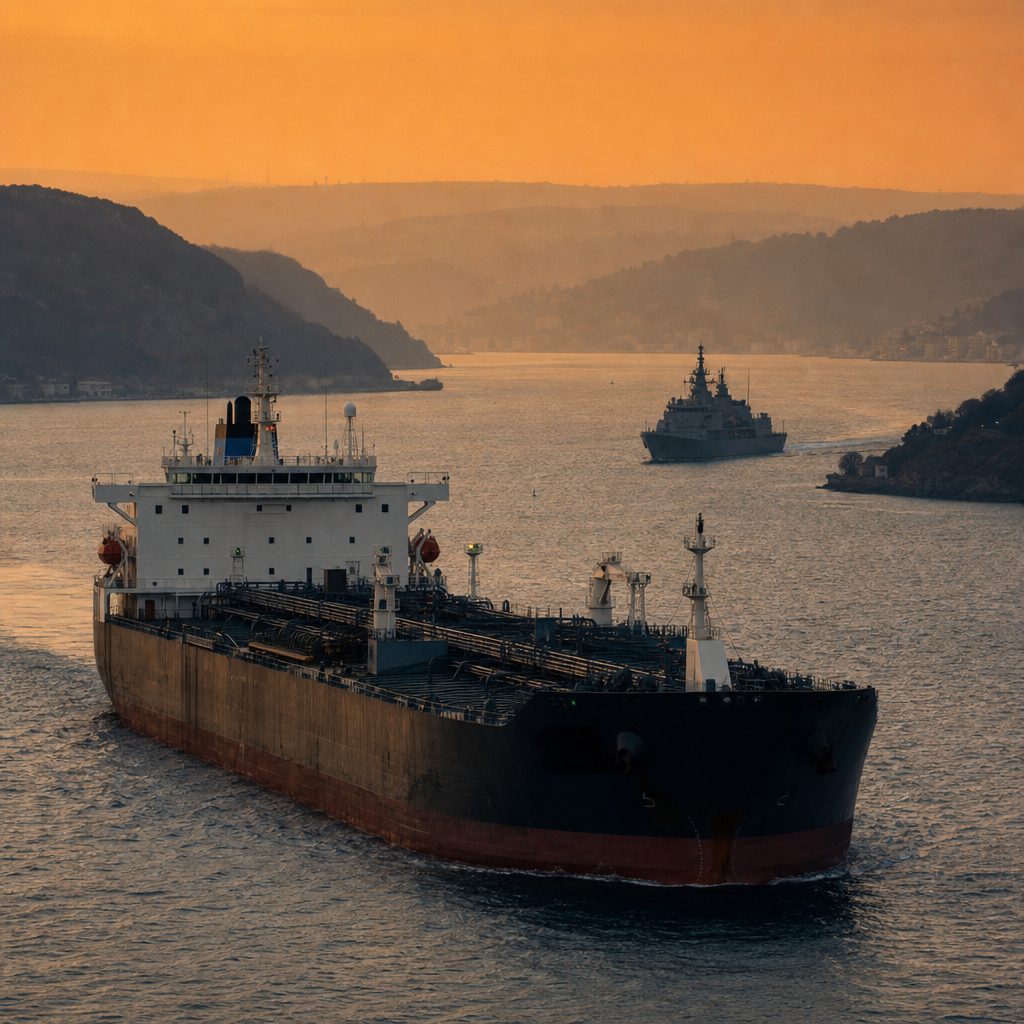
Roughly a fifth of the world's oil passes through the Strait of Hormuz. Attacks on shipping there reverberate through every economy on earth.
Ceasefires are easy to declare and hard to keep. The truce that quieted the 2026 war between the United States and Iran had never been more than a fragile pause — a document signed by leaders who distrusted one another, resting on assurances that neither side fully believed. This week, in the space of forty-eight hours, it came apart. Attacks on commercial vessels in the Strait of Hormuz on July 6 and 7 triggered a rapid, cascading collapse: Washington declared the ceasefire "over," launched a renewed wave of strikes against dozens of targets inside Iran, and reimposed the oil sanctions it had suspended only weeks earlier. Global oil prices, which had been drifting near $70 a barrel, surged past $100 within days.
The unravelling has returned one of the most dangerous confrontations of the decade to the front pages, and it has done so in the one place guaranteed to send tremors through the world economy. The Strait of Hormuz is not merely a strategic waterway; it is the single most important chokepoint in the global energy trade, the narrow channel through which roughly a fifth of the world's oil is shipped. What happens there is never a regional story. It is a story about the price every household, factory and government on the planet pays to keep the lights on.
How the truce came about — and why it was always brittle
To understand how quickly the ceasefire fell apart, it helps to recall how tentatively it was assembled. The 2026 war had opened with a sudden and devastating campaign earlier in the year, followed by a spring lull and, in mid-June, a memorandum of understanding intended to formalise the pause. Signed on June 17 by the American and Iranian leaderships, the document was hailed at the time as a breakthrough. In truth it was closer to a wager — a bet by both sides that the costs of continued fighting outweighed the risks of a paper peace neither trusted.
Such agreements can hold, but only when both parties have an interest in enforcing them and a mechanism for containing the inevitable incidents. This one had neither in sufficient measure. Command and control on the ground was fractured; hardliners on both sides viewed the truce as a betrayal; and the memorandum lacked the dense verification machinery that keeps more durable ceasefires alive. It was, in the language of diplomacy, a thin deal — and thin deals break at the first hard test.
A ceasefire is only as strong as the interest both sides have in keeping it. This one rested on exhaustion, not trust — and exhaustion fades.
The spark in the strait
The hard test came at sea. On July 6 and 7, vessels transiting the Strait of Hormuz were attacked, disrupting traffic through the channel and raising the immediate spectre of a wider closure. The details remain contested — attribution in these waters is notoriously murky, and each side has an incentive to shape the narrative — but the strategic effect was instantaneous. Insurers moved to reprice the risk of sailing through the strait; shipping companies weighed diversions that do not exist, because for Gulf oil there is no practical alternative route; and traders priced in the possibility, however remote, of the chokepoint being closed.
On July 7, the American president declared the ceasefire "over," and the machinery of confrontation restarted at speed. The United States launched strikes reported to have hit more than eighty targets inside Iran, and the oil sanctions suspended under the June memorandum were swiftly reimposed. Within days a truce that had taken months of quiet diplomacy to construct had been dismantled by a single flashpoint at sea — a vivid illustration of how a narrow, high-stakes waterway can drag two governments back into open conflict against, arguably, the interests of both.
The oil shock and its reach
Financial markets did the rest of the talking. Crude, which had settled around $70 a barrel during the lull, climbed past $100 as the strait crisis unfolded — a move of nearly fifty per cent in a matter of days. For an energy market that had been cautiously pricing in de-escalation, the reversal was violent. And unlike a battlefield hundreds of kilometres from the nearest port, an oil-price spike touches everyone: it feeds into transport and manufacturing costs, into the price of food that has to be moved and fertiliser that has to be produced, and into the inflation calculations of central banks that had been hoping to ease.
The particular danger of a Hormuz crisis is that the market cannot easily "route around" it. Pipelines that bypass the strait carry only a fraction of the oil that moves by tanker; the spare capacity does not exist to replace a serious disruption. That structural reality is precisely why the strait has such outsized power to move prices: traders are not reacting to the oil that has actually stopped flowing, but to the terrifying possibility of how much could stop if the confrontation escalates. Fear, in this market, is priced as ruthlessly as fact.
The wider ripples
The renewed confrontation is also reshaping calculations well beyond the Gulf. Energy-importing economies across Asia and Europe, already navigating a fragile recovery, face the prospect of higher fuel bills at the worst possible moment. Producers outside the region stand to benefit from higher prices, redrawing the map of who gains and who loses from instability. And the crisis has intersected with other pressure points in the global system — including reported curbs on the export of strategic materials such as helium by China — that together suggest a world in which the arteries of trade are increasingly treated as instruments of leverage rather than neutral infrastructure.
The strait cannot be bypassed. That is why fear moves the market there faster than fact — traders price not the oil that has stopped, but the oil that might.
Where this goes next
The immediate question is one of escalation control. Both governments have now demonstrated that they can restart the conflict quickly; the harder task is demonstrating that they can stop it. History offers a sobering pattern: confrontations that reignite after a broken ceasefire tend to be more dangerous than the original, because the trust that might have contained them has already been spent. Rebuilding even a minimal truce will require not just a new document but a credible mechanism for handling the next incident at sea — the kind of machinery the June memorandum conspicuously lacked.
For the wider world, the lesson of this week is uncomfortable but clear. The global economy remains hostage to a handful of narrow waterways and to the political tempers of the states that flank them. A single night of attacks on shipping in the Strait of Hormuz was enough to erase a peace agreement and add tens of dollars to the price of a barrel of oil. Until the underlying dispute is resolved rather than merely paused, that vulnerability will not go away — and every household that pays a fuel bill will continue to feel the aftershocks of decisions made far from home.