Oil Surges Past $100 as Hormuz Crisis Reignites — What It Means for the Global Economy
In the space of a few days, crude climbed from around $70 to more than $100 a barrel. The jump is more than a market headline; it is a tax on everything that has to be grown, made or moved.
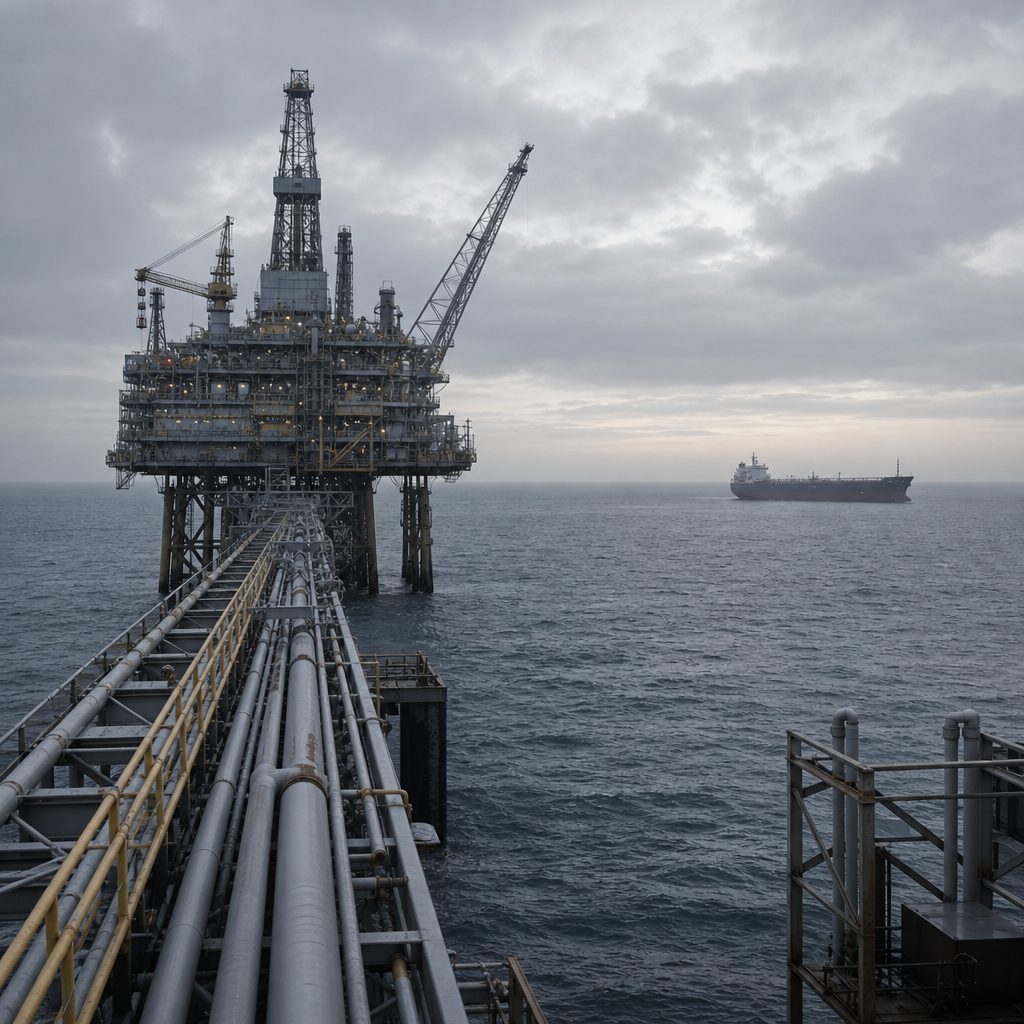
When the Gulf trembles, the price of a barrel does too — and that price is embedded in nearly everything a modern economy consumes.
There are few numbers in the global economy as quietly powerful as the price of a barrel of oil. It does not appear on most household budgets as a line item, yet it is buried inside almost every one of them: in the cost of the fuel that moves goods to shops, the fertiliser that grows food, the plastics and chemicals woven through modern manufacturing, and the electricity that in many countries is still generated by burning hydrocarbons. So when crude jumps from around $70 a barrel to more than $100 in a matter of days — as it has amid the reignited crisis in the Strait of Hormuz — the effect is not confined to trading screens. It is a shock that works its way, slowly and unevenly, into the price of nearly everything.
The immediate trigger is geopolitical: the collapse of the fragile ceasefire between the United States and Iran, and the attacks on shipping in the Strait of Hormuz that preceded it. But the reason a regional confrontation can move the global oil price by nearly fifty per cent lies in the peculiar structure of the oil market itself — a structure worth understanding, because it explains why these shocks are so violent, so fast, and so hard to escape.
Why one waterway moves the whole market
Roughly a fifth of the world's oil passes through the Strait of Hormuz, the narrow channel connecting the Gulf to the open ocean. Crucially, there is no adequate way around it. The pipelines that bypass the strait can carry only a fraction of the volume that moves by tanker, and the world's spare production capacity is nowhere near large enough to replace a serious disruption. That combination — enormous volume, no alternative route, no easy substitute — is what gives the strait its outsized power over prices.
It also explains a feature of oil-price shocks that often puzzles observers: prices frequently spike before any oil has actually stopped flowing. Markets are forward-looking. Traders are not pricing the barrels that have physically been lost in a given week; they are pricing the probability of far larger losses if the confrontation escalates. A single night of attacks on shipping can therefore add tens of dollars to the price of a barrel not because supply has collapsed, but because the risk of collapse has suddenly become plausible. In the oil market, fear is a fundamental.
The market does not price the oil that has stopped flowing. It prices the oil that might — and fear is as tradable as supply.
How the shock spreads
Once the price of crude jumps, it begins a slow migration through the rest of the economy. The first and most visible effect is at the fuel pump, where higher crude feeds fairly quickly into petrol and diesel. But the deeper impact is indirect. Transport is an input to almost every good and service, so higher fuel costs ripple into the price of food, consumer goods and construction. Energy-intensive industries — chemicals, fertilisers, metals, glass — feel it directly in their margins. And because so many products embed energy at multiple stages of their supply chain, the effect compounds.
The second-order consequence is the one that most worries policymakers: inflation. An oil shock is a classic supply-side price pressure, pushing up costs across the board even when demand is weak. That places central banks in an uncomfortable position. Raising interest rates to contain the inflationary impulse risks choking off growth; holding rates steady risks letting inflation expectations drift higher. There is no clean policy answer to a shock that makes things simultaneously more expensive and more fragile — which is precisely why oil spikes have so often preceded economic downturns.
Winners and losers
An oil-price surge does not fall evenly. Energy-importing economies — much of Europe and Asia among them — bear the brunt, seeing their import bills swell and their currencies pressured as more foreign exchange flows out to pay for fuel. Households in these countries feel the squeeze first through transport and heating, then through the broader rise in prices that follows. For economies already navigating a delicate recovery, the timing could hardly be worse.
Producers, by contrast, gain. Oil-exporting states see revenues climb, and energy companies enjoy fatter margins. Producers located outside the zone of conflict benefit twice over: from higher prices and from their status as safer suppliers. This redistribution is one of the underappreciated features of geopolitical instability — it does not simply destroy value, it transfers it, rewarding those positioned to sell into a frightened market and punishing those who must buy from it.
The longer shadow: energy as leverage
The current shock also fits a broader pattern that has come to define the decade: the treatment of the world's economic arteries as instruments of pressure rather than neutral plumbing. Oil chokepoints, shipping lanes, pipelines and even the export of strategic materials are increasingly wielded as tools of statecraft. The reimposition of oil sanctions on Iran within days of the ceasefire's collapse is one example; reported curbs by China on the export of strategic gases such as helium are another. Each on its own is manageable. Together they describe a world in which the flow of critical inputs can no longer be taken for granted.
An oil shock does not destroy wealth so much as move it — from those who must buy energy to those positioned to sell it.
What households and policymakers can do
For all its severity, an oil shock is not a permanent condition. Prices that spike on fear can retreat quickly if the underlying crisis de-escalates, because the feared disruption never fully materialises. That is the optimistic scenario: a diplomatic off-ramp in the Gulf that allows shipping to normalise and prices to drift back toward their pre-crisis range. The pessimistic scenario is an escalation that turns the fear of disruption into the reality of it — a genuine, sustained reduction in the oil reaching the market.
Between those poles, the practical lessons are familiar but worth restating. For governments, the episode is a reminder of the strategic value of diversified energy sources, resilient supply chains and buffer stocks that can absorb a shock. For households, it is a reminder of how exposed everyday budgets remain to events on the far side of the world. And for all of us, it is a reminder that the global economy, for all its sophistication, still runs on a commodity whose price can be reset overnight by a confrontation in a strait most people will never see.