How Sanctions Are Quietly Redrawing the Map of Global Trade
Restrictions meant to isolate a handful of states are rerouting supply chains and creating new economic blocs. The unintended consequences are global and lasting.
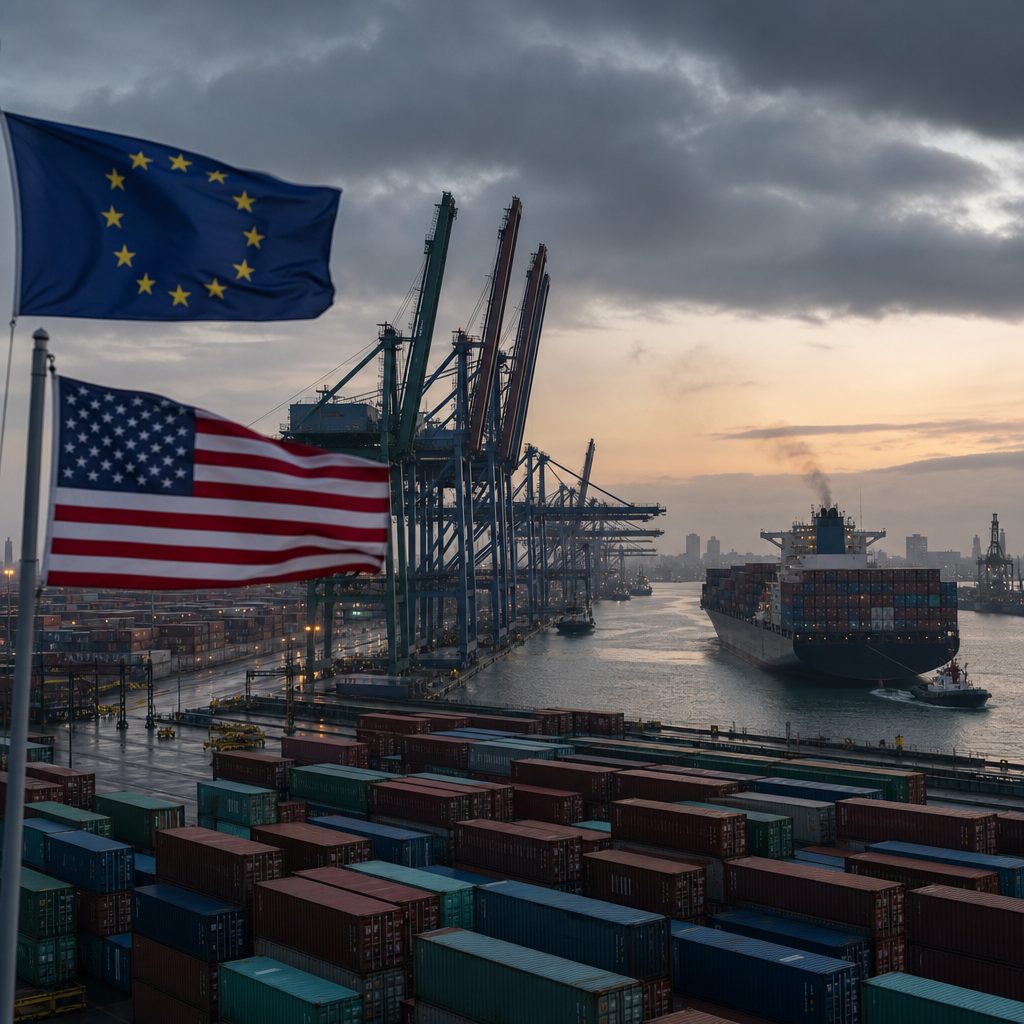
Sanctions are rerouting the flow of goods across the world's ports.
Sanctions are usually discussed as a moral and political instrument — a way to punish behaviour a government finds unacceptable without resorting to force. But their deepest effects are economic and structural, and they are unfolding far from the headlines. As sanctions have proliferated over the past decade, they have begun to reshape the plumbing of the global economy: the routes goods travel, the currencies they are paid in, and the alliances that govern trade. The map that emerges looks increasingly different from the one the world grew used to.
The intention behind most sanctions is narrow. A specific state is targeted, its access to markets, finance or technology restricted, in the hope that economic pain will change its calculations. What is rarely appreciated in advance is how the target — and everyone who trades with it — adapts. Trade does not simply stop when a barrier goes up; it finds another path. And the paths it finds tend to be durable, because the infrastructure and relationships built to circumvent restrictions do not vanish when the political mood shifts.
Trade reroutes, it does not disappear
The first lesson of the sanctions era is that goods are remarkably good at finding their way to buyers. When a direct route is blocked, an indirect one opens. Intermediary states and trading hubs step in, buying restricted goods and reselling them, taking a margin for the service and the risk. Commodities that cannot be sold to one market are redirected, often at a discount, to another that is happy to accept them. The overall volume of trade may barely change; what changes is who handles it, who profits and who is cut out.
This rerouting has enriched a set of intermediary economies that have positioned themselves as bridges between sanctioned and unsanctioned worlds. For these states, the fragmentation of global trade is not a crisis but an opportunity. They gain leverage, revenue and strategic importance precisely because they are willing to trade where others cannot. Over time, this creates powerful constituencies with an interest in the persistence of the very divisions that sanctions create.
Trade blocked at the front door rarely stays out. It comes in through the side, and the side entrance tends to become permanent.
The slow retreat from a single system
For decades, the defining feature of the global economy was its integration — a single, dense network in which almost everyone traded with almost everyone else, largely on common terms and in a handful of dominant currencies. Sanctions, especially those targeting the financial system, are quietly eroding that unity. States that fear being cut off are building alternatives: parallel payment systems, arrangements to trade in national currencies, and reserves held in forms less exposed to restriction.
None of these alternatives yet rivals the established system in scale or efficiency. But their existence changes the strategic landscape. The credible threat of financial exclusion was, for years, one of the most powerful non-military tools available to the states that controlled the system's chokepoints. As alternatives develop, that threat loses some of its bite. Each new sanction that pushes a state toward the alternatives accelerates their growth, in a dynamic that may ultimately weaken the very leverage sanctions were meant to project.
The rise of trading blocs
As the single global system fragments, it is being replaced not by chaos but by blocs — clusters of states that trade preferentially with one another, aligned as much by strategic sympathy as by economic logic. This is a return to an older pattern, one the postwar order was explicitly designed to overcome. Blocs offer their members security and predictability, but they do so at a cost: reduced efficiency, higher prices and the loss of the gains that come from trading with the whole world rather than a favoured part of it.
The formation of blocs also hardens political divisions. When economic ties reinforce strategic alignments, the cost of switching sides rises, and the space for neutrality shrinks. States that would prefer to trade freely with everyone find themselves pressed to choose. The result is a world in which economic and geopolitical maps increasingly overlap — a development that makes the global system less flexible and, in a crisis, less able to absorb shocks.
Who pays the price
The costs of this reordering are unevenly distributed. Large, diversified economies can absorb the friction of rerouted trade and fragmented finance. Smaller and poorer economies often cannot. For them, higher shipping costs, more expensive intermediation and reduced access to the most efficient markets translate directly into higher prices for essentials and slower growth. The reshaping of trade, driven by the strategic decisions of a few great powers, is felt most acutely by those with the least say in it.
Consumers everywhere pay too, though the mechanism is less visible. When supply chains are rerouted through intermediaries, the added costs are ultimately passed along. When trade fragments into blocs, the loss of efficiency shows up as persistently higher prices. Sanctions are often described as a way to impose costs on an adversary while sparing one's own population. In a deeply interconnected economy, that separation is far harder to achieve than the rhetoric suggests.
A tool that outlives its purpose
Perhaps the most consequential feature of sanctions is their tendency to persist. Imposed in a moment of crisis, they are politically difficult to lift, even when the original justification fades. Removing sanctions can look like a reward for bad behaviour, so they linger, and the structures built around them harden into permanence. The rerouted trade routes, the alternative payment systems, the intermediary hubs — all become entrenched features of the landscape.
Sanctions are easy to impose and hard to remove. The structures they create tend to outlast the crises that justified them.
This durability is why the cumulative effect of sanctions is so much greater than the sum of their individual purposes. Each measure, taken on its own, is a targeted response to a specific problem. Together, layered over years, they are reshaping the architecture of the global economy — pushing it away from a single integrated system and toward a patchwork of blocs, workarounds and parallel structures. That transformation is unlikely to reverse simply because a particular dispute is resolved.
The world is not deglobalising in any simple sense; trade remains vast, and the appetite for it undimmed. What is happening is subtler and, in its way, more profound: the rules, routes and relationships that govern that trade are being rewritten, quietly and cumulatively, by the accumulating weight of restrictions. The map of global commerce is being redrawn not by a grand design but by a thousand individual decisions to block, and a thousand more to find a way around. Understanding where that map is heading is now essential to understanding the shape of world affairs.